
Category Mining Equipment
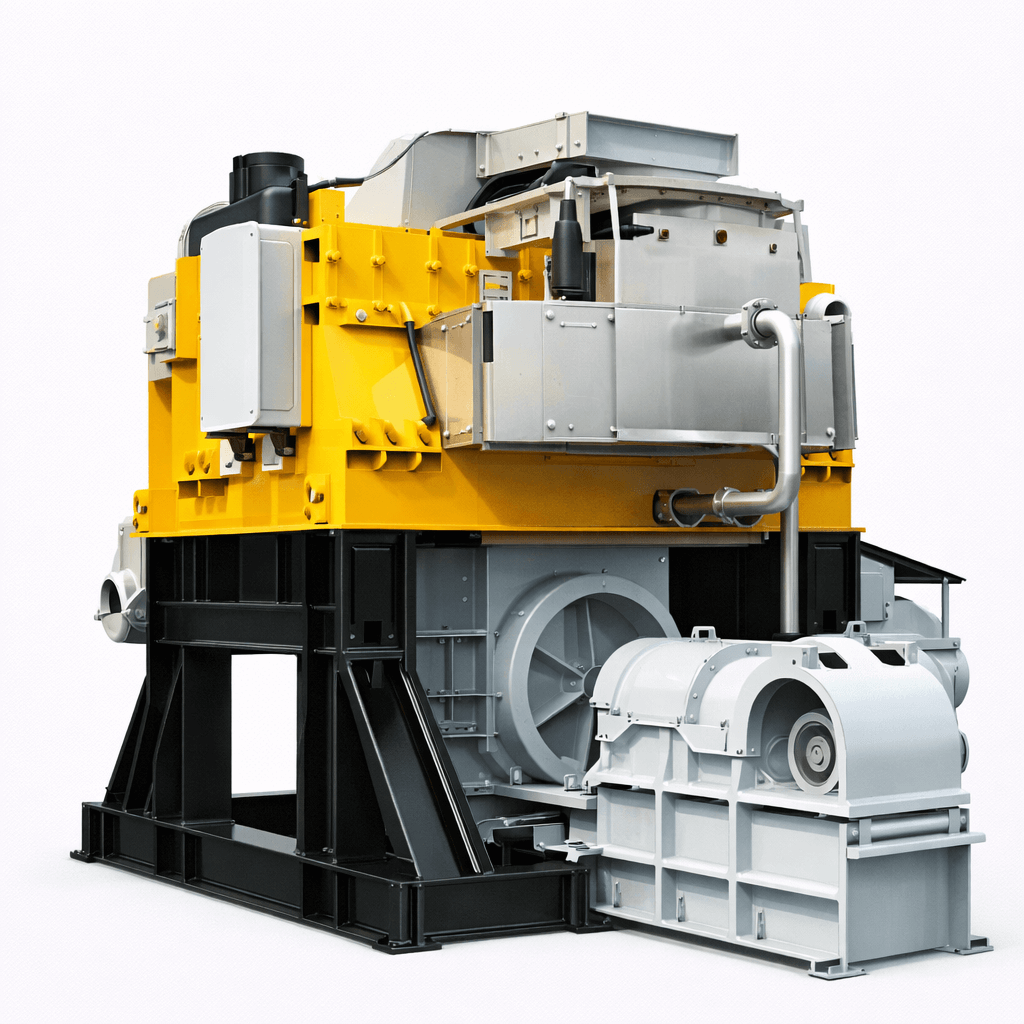
ZGT Series High Gradient Magnetic Separator
The ZGT Series High Gradient Magnetic Separator is used to separate weakly magnetic ores and to remove iron or purify non-metallic minerals, using magnetic force combined with pulsating fluid action and gravity.
Pricing Disclaimer: All pricing is subject to change and may be impacted by tariffs, duties, shipping rates, and international market conditions. Final pricing will be confirmed at the time of order placement and locked in once a purchase agreement is issued.
Share Product :
The ZGT Series High Gradient Magnetic Separator is designed for separation tasks where conventional magnetic equipment may be limited by low mineral magnetism or fine particle behavior. It is commonly applied in mineral processing plants to recover weakly magnetic ores such as hematite, manganese ore, ilmenite, wolframite, and tantalum-niobium ores, and it is also used for de-ironing and purification of non-metallic materials including quartz, feldspar, nepheline, fluorite, sillimanite, spodumene, and kaolin.
Separation is achieved by applying a high-gradient magnetic field while slurry moves through the separator under the combined effects of magnetic force, pulsating fluid force, and gravity. The pulsating slurry action helps keep particles dispersed during processing, supporting cleaner magnetic concentrate separation and reducing the tendency for the magnetic medium to become blocked during continuous operation.
The vertically rotating ring and reverse concentrate washing are intended to maintain stable performance over long runs by limiting buildup in the magnetic medium. This supports consistent separation results and helps reduce the frequency of shutdowns for cleaning, especially in applications with higher fines content.
The separator supports a broad separation size range with a maximum separation size of 2.0 mm, which can reduce the need for tight upstream classification in some circuits. For fine separation work, the best separation fineness is listed as minus 0.074 mm (200 mesh) accounting for 60–100%, or minus 2 mm depending on the material and separation objective.
The technical data below lists available ZGT models with feeding size limits, slurry concentration ranges, throughput capacity, installed power, and weight. If you share your ore type, target cut size, feed solids percentage, and required throughput, Bros Dirt Diggers can help align model selection with your circuit design and performance goals.
The table below shows ZGT Series model capacity ranges and requirements. Use max feeding size and feeding concentration to confirm feed suitability; use slurry passing-through capacity and ore capacity to estimate throughput; and use power and weight for utility and layout planning.
| Model | Max Feeding Size (mm) | Feeding Concentration (%) | Slurry Passing Through Capacity (m3/h) | Capacity of Ore (m3/h) | Power (kW) | Weight (t) |
| ZGT-500 | 1.0 | 10-40 | 0.5-1.0 | 0.05-0.25 | 13.5 | 1.5 |
| ZGT-750 | 1.0 | 10-40 | 0.1-2.0 | 0.1-0.5 | 22 | 3 |
| ZGT-1000 | 1.3 | 10-40 | 12.5-20 | 4-7 | 28.6 | 6 |
| ZGT-1250 | 1.3 | 10-40 | 20-50 | 10-18 | 35 | 14 |
| ZGT-1500 | 1.3 | 10-40 | 50-100 | 20-30 | 44 | 20 |
| ZGT-1750 | 1.3 | 10-40 | 75-150 | 30-50 | 62 | 35 |
| ZGT-2000 | 1.3 | 10-40 | 100-200 | 50-80 | 74 | 50 |
| ZGT-2500 | 1.3 | 10-40 | 200-400 | 100-150 | 94 | 105 |
Note: The magnetic strength should be determined in accordance with the nature of the ore. ZGT Series High Gradient Magnetic Separators can be customer-made.
Product Specification Disclaimer:
While Bros Dirt Diggers makes every effort to ensure product specifications and details are accurate, final equipment specifications are subject to manufacturer confirmation. Customers should verify all critical details before purchase.
Customize Your Own Crushing Plant Now
Fill your requirements here, and we’ll send the custmized solution and quotation to you by the reserved contact information.
Related Product
Get in Touch
We’re always here to help with your equipment and plant needs.
Send Us a Message
Tell us what you’re working on — our team will help you find the right equipment or solution.
572V+75W Octave, Arizona, USA
Call Center 1
541-513-4542
541-513-4542
Call Center 2
480-241-2454
480-241-2454
brosdirtdiggersllc@gmail.com