

Category Grinding Equipment
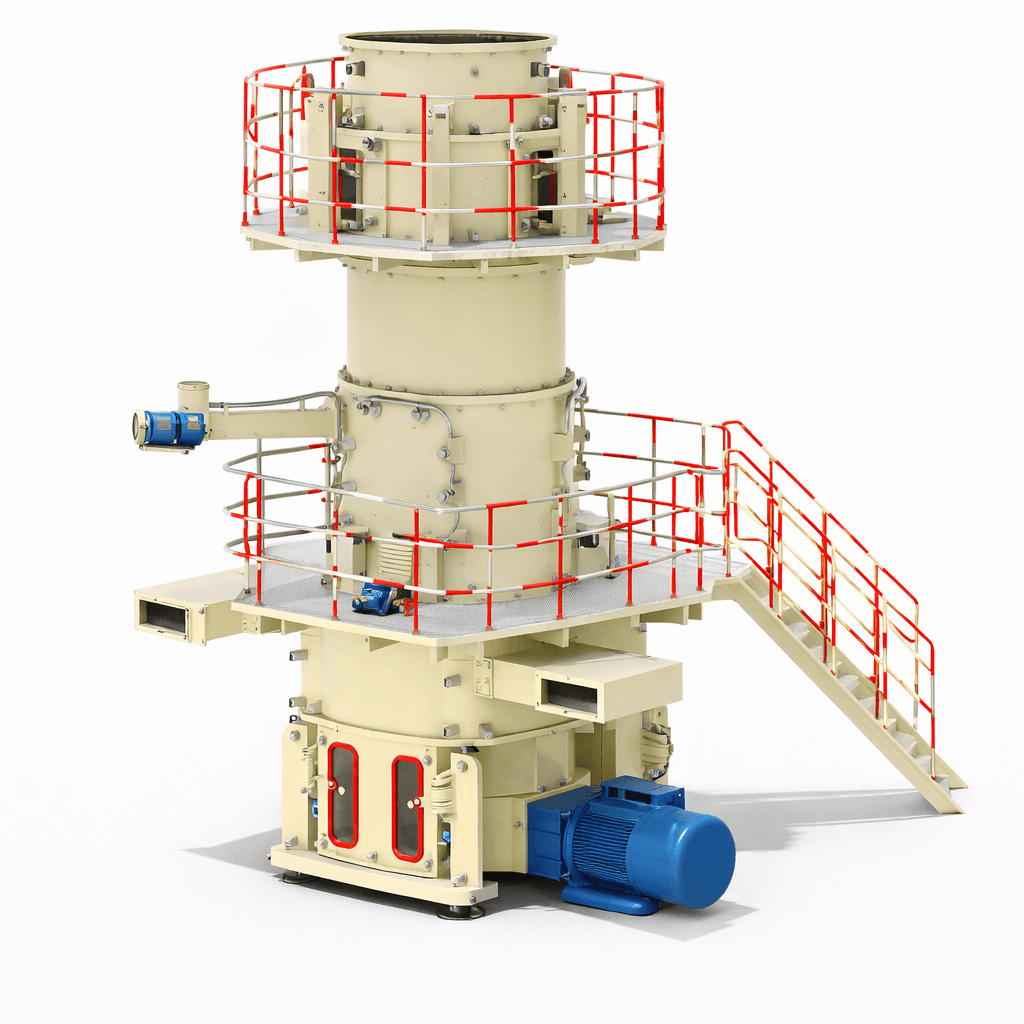
LUM Series Ultrafine Vertical Roller Mill
The LUM Series Ultrafine Vertical Roller Mill is designed for ultrafine grinding, drying, classifying, and conveying of mineral materials in a compact, integrated system.
Pricing Disclaimer: All pricing is subject to change and may be impacted by tariffs, duties, shipping rates, and international market conditions. Final pricing will be confirmed at the time of order placement and locked in once a purchase agreement is issued.
Share Product :
The LUM Series Ultrafine Vertical Roller Mill is developed based on extensive vertical mill manufacturing experience combined with advanced technology from Taiwan and Germany. It integrates grinding, drying, classifying, and material transportation into a single vertical system, making it well suited for ultrafine powder production where space efficiency and process integration are critical.
Material is fed onto the grinding plate and processed by specially designed rollers that apply optimized pressure and motion. The roller shell and grinding plate curve are engineered to improve grinding efficiency, allowing the system to achieve stable ultrafine output while maintaining consistent product quality.
The enclosed vertical layout minimizes footprint and simplifies system layout. Integrated classification ensures precise control of particle size, while internal conveying moves finished powder efficiently through the system. These design choices help reduce overall investment and installation costs compared with multi-stage grinding systems.
The mill operates with low noise and minimal dust generation, supporting environmentally controlled production environments. Finished products exhibit low iron content and high whiteness and purity, making the system suitable for applications where material quality is critical.
An integrated PLC or DCS automatic control system supports stable operation and remote monitoring, reducing labor requirements and improving operating consistency. The LUM Series is well suited for operators seeking reliable ultrafine grinding performance with efficient energy use and simplified plant integration.
The technical data below outlines available LUM Series models, including power configuration, capacity ranges, and detailed particle size characteristics. Capacity values are shown in tons per hour (TPH). Our team can assist with model selection and configuration based on material properties and fineness requirements.
The table below provides specifications for LUM Series ultrafine vertical roller mill models, including power configuration, capacity, and detailed particle size distribution data.
| Model | LUM1525 | LUM1632 | LUM1836 | ||||||||||||||||||
|---|---|---|---|---|---|---|---|---|---|---|---|---|---|---|---|---|---|---|---|---|---|
| Main machine power (kW) | 220~250 | 280~315 | 355~400 | ||||||||||||||||||
| Powder concentrator power (kW) | 1 × 75 / 6 × 15 | 1 × 110 / 6 × 22 / 8 × 15 | 1 × 132 / 8 × 22 | ||||||||||||||||||
| Fan power (kW) | 160~200 | 220~250 | 315~355 | ||||||||||||||||||
| Capacity (TPH) | 10.5~11.5 | 8~9 | 6~7 | 4~4.5 | 3~3.5 | 2.2~2.5 | 1.6~2.0 | 12.5~13.5 | 11.5~12.5 | 8.5~9.5 | 5.5~6.5 | 4~5 | 2.8~3.2 | 2~2.5 | 14~15 | 12~13 | 11~12 | 7.5~8.5 | 5.5~6.5 | 3.2~3.6 | 2.3~2.8 |
| 325 mesh residue on sieve (%) | 0.015 | 0.015 | 0.01 | 0 | 0 | 0 | 0 | 0.015 | 0.015 | 0.01 | 0 | 0 | 0 | 0 | 0.015 | 0.015 | 0.01 | 0 | 0 | 0 | 0 |
| Content > 2 μm (%) | 33±2 | 38±2 | 43±2 | 48±2 | 53±2 | 60±2 | 70±2 | 33±2 | 38±2 | 43±2 | 48±2 | 53±2 | 60±2 | 70±2 | 33±2 | 38±2 | 43±2 | 48±2 | 53±2 | 60±2 | 70±2 |
| Average particle size D50 (μm) | 4.2±0.5 | 3.0±0.4 | 2.6±0.2 | 1.8±0.2 | 1.6±0.6 | 1.4±0.6 | 1.2±0.2 | 4.2±0.5 | 3.0±0.4 | 2.6±0.2 | 1.8±0.2 | 1.6±0.6 | 1.4±0.6 | 1.2±0.2 | 4.2±0.5 | 3.0±0.4 | 2.6±0.2 | 1.8±0.2 | 1.6±0.6 | 1.4±0.6 | 1.2±0.2 |
| Size distribution D97 (μm) | 30±2.0 | 15±1.5 | 15±1.0 | 10±1.0 | 8±0.5 | 6.5±0.5 | 5±0.5 | 30±2.0 | 15±1.5 | 15±1.0 | 10±1.0 | 8±0.5 | 6.5±0.5 | 5±0.5 | 30±2.0 | 15±1.5 | 15±1.0 | 10±1.0 | 8±0.5 | 6.5±0.5 | 5±0.5 |
| Compact apparent specific gravity (g/cm³) | 1.18 | 1.06 | 0.90 | 0.85 | 0.76 | 0.65 | 0.55 | 1.18 | 1.06 | 0.90 | 0.85 | 0.76 | 0.65 | 0.55 | 1.18 | 1.06 | 0.90 | 0.85 | 0.76 | 0.65 | 0.55 |
| Loose apparent specific gravity (g/cm³) | 0.45 | 0.40 | 0.34 | 0.32 | 0.28 | 0.25 | 0.2 | 0.45 | 0.40 | 0.34 | 0.32 | 0.28 | 0.25 | 0.2 | 0.45 | 0.40 | 0.34 | 0.32 | 0.28 | 0.25 | 0.2 |
| Moisture content (%) | Below 0.3 | Below 0.3 | Below 0.3 | ||||||||||||||||||
Product Specification Disclaimer:
While Bros Dirt Diggers makes every effort to ensure product specifications and details are accurate, final equipment specifications are subject to manufacturer confirmation. Customers should verify all critical details before purchase.
Customize Your Own Crushing Plant Now
Fill your requirements here, and we’ll send the custmized solution and quotation to you by the reserved contact information.
Related Product
Get in Touch
We’re always here to help with your equipment and plant needs.
Send Us a Message
Tell us what you’re working on — our team will help you find the right equipment or solution.
572V+75W Octave, Arizona, USA
Call Center 1
541-513-4542
541-513-4542
Call Center 2
480-241-2454
480-241-2454
brosdirtdiggersllc@gmail.com