

Category Mining Equipment
6S Shaking Table
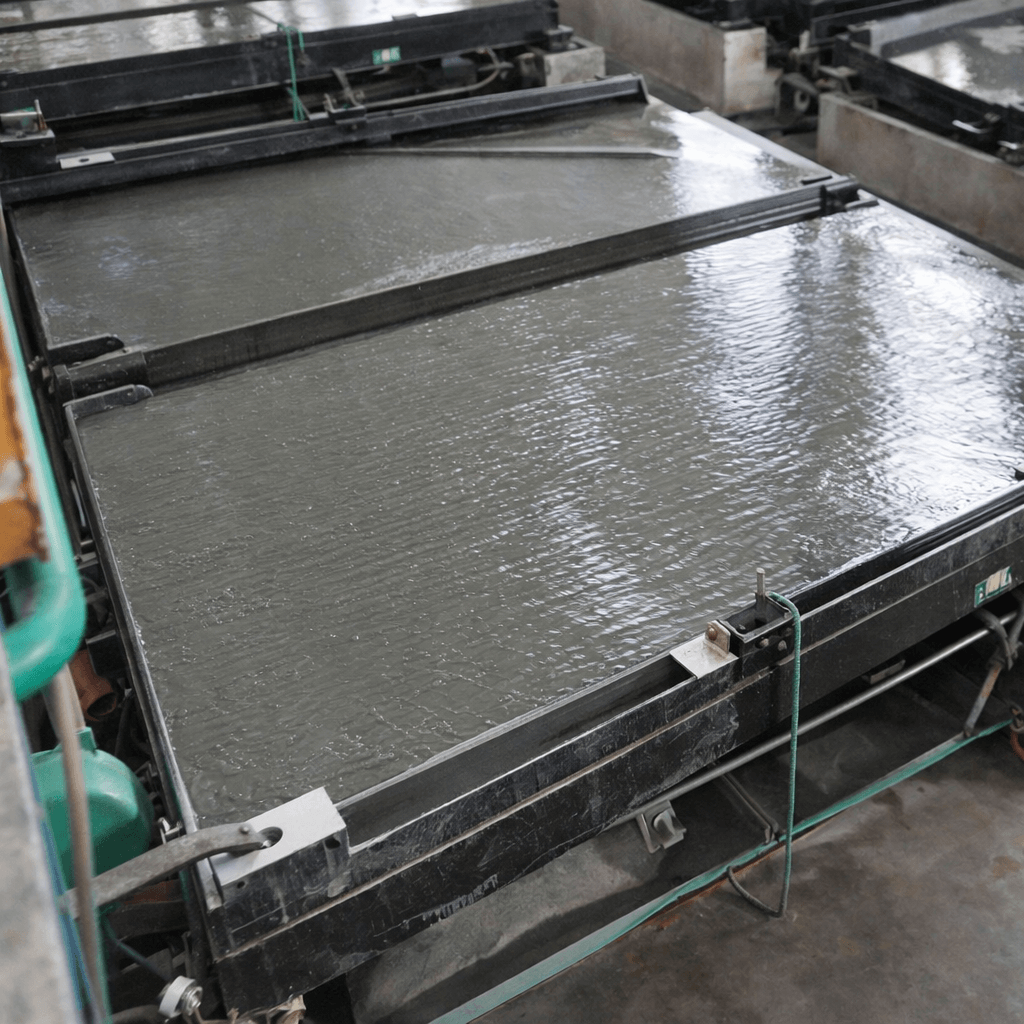
The 6S Shaking Table is a gravity concentration table used to separate and recover heavier minerals from lighter material in ore and slurry streams for roughing, cleaning, and scavenging duty.
Pricing Disclaimer: All pricing is subject to change and may be impacted by tariffs, duties, shipping rates, and international market conditions. Final pricing will be confirmed at the time of order placement and locked in once a purchase agreement is issued.
Share Product :
The 6S Shaking Table is a core piece of gravity concentration equipment used to separate minerals by specific gravity on a riffled table surface. It is commonly applied to tungsten, tin, tantalum, niobium, gold, and other valuable heavy minerals, and it can also be used in iron, manganese, and coal processing where a density-based split is useful.
Material is fed onto the deck along with water, and the deck’s reciprocating motion combined with a controlled cross-slope creates stratification. Heavier particles settle into the riffles and move toward the concentrate side, while lighter gangue is carried away with the wash water. Cross fall and stroke adjustments help tune the separation for different feed characteristics, and the table is typically configured for rough concentration, cleaning (fine concentration), or scavenging depending on where it sits in the circuit.
In practice, this allows a plant to recover value without adding reagents, support a cleaner separation step ahead of flotation or magnetic separation, and improve overall recovery where gravity differences are strong. It is also useful for producing a concentrate and a tailing stream in a single pass when feed sizing and operating conditions are appropriate.
The 6S Shaking Table is often a good fit when you have a screened or classified feed and want a gravity upgrade on coarse sand, fine sand, or slurry fractions. Typical applications include heavy-mineral recovery in crushing and screening circuits, gravity cleanup in milling and classification circuits, and recovery from tailings where sizing and density contrast support separation.
Model selection is driven by deck size and selective area, the target feed-size range, water consumption, stroke and jig frequency ranges, cross fall adjustment, and motor specifications. The technical table below lists each configuration and the stated operating ranges so you can match the table to your feed sizing and circuit requirements.
If you tell us your mineral type, feed sizing (coarse sand, fine sand, or slurry), and target throughput, we can help you select the right 6S Shaking Table configuration and discuss where it fits best in your process flow.
Use this table to compare 6S Shaking Table configurations by table size and selective area, feed-size ranges for coarse sand, fine sand, and slurry, water consumption, adjustable stroke and frequency, cross fall range, motor details (including revolutions per minute (RPM)), overall dimensions, and weight.
| Model and Specification | 6-S/LY | 6-S/LY | 6-S/LY | LY | ||
| Table Size(mm) Length×Feed width×Concentrate width | 4520 × 1850 × 1560 | 3000 × 1620 × 1100 | 2100 × 1050 × 850 | 1100 × 500 × 430 | ||
| Selective area (㎡) | 7.67 | 4.08 | 2 | 0.51 | ||
| Feed size(mm) | coarse sand | 1-2.5 | 0.6-1.5 | 0.4-0.8 | 0.1-0.2 | |
| fine sand | 0.8-1.2 | 0.3-0.8 | 0.2-0.5 | 0.05-0.1 | ||
| slurry | 0.3-0.6 | 0.2-0.4 | 0.1-0.2 | 0.03-0.05 | ||
| Water consumption(TPH) | 0.5~3.5 | 0.3~1.5 | 0.2~1 | 0.1~0.5 | ||
| Stroke(mm) | 8~36 | 10~30 | 12~28 | 9~17 | ||
| Jig frequency(q/m) | 240~380 | 240~420 | 250~450 | 280~460 | ||
| Cross fall(°) | 0°~5° | 0°~8° | 0°~10° | 0°~10° | ||
| Motor | Model | Y70L-4 | Y100L-4 | Y90L-4 | Y80L-4 | |
| Power(kW) | 1.1 | 1.1 | 1.1 | 0.55 | ||
| Revolving speed(RPM) | 1400 | 1400 | 1400 | 1400 | ||
| V-belt(mm) | A-2000 | A-1033 | B-2007 | A-1245 | ||
| Overall Dimension (Length × Width × Height) mm | 5630 × 1850 × 900 | 4075 × 1320 × 780 | 3040 × 1050 × 1020 | 1530 × 500 × 800 | ||
| Weight(kg) | 650 | 550 | 350 | 150 | ||
| Notes: The above technical parameters based on stationary type shaking table, are for your reference only. | ||||||
Product Specification Disclaimer:
While Bros Dirt Diggers makes every effort to ensure product specifications and details are accurate, final equipment specifications are subject to manufacturer confirmation. Customers should verify all critical details before purchase.
Customize Your Own Crushing Plant Now
Fill your requirements here, and we’ll send the custmized solution and quotation to you by the reserved contact information.
Related Product
Get in Touch
We’re always here to help with your equipment and plant needs.
Send Us a Message
Tell us what you’re working on — our team will help you find the right equipment or solution.
572V+75W Octave, Arizona, USA
Call Center 1
541-513-4542
541-513-4542
Call Center 2
480-241-2454
480-241-2454
brosdirtdiggersllc@gmail.com