Category Grinding Equipment
Raymond Mill
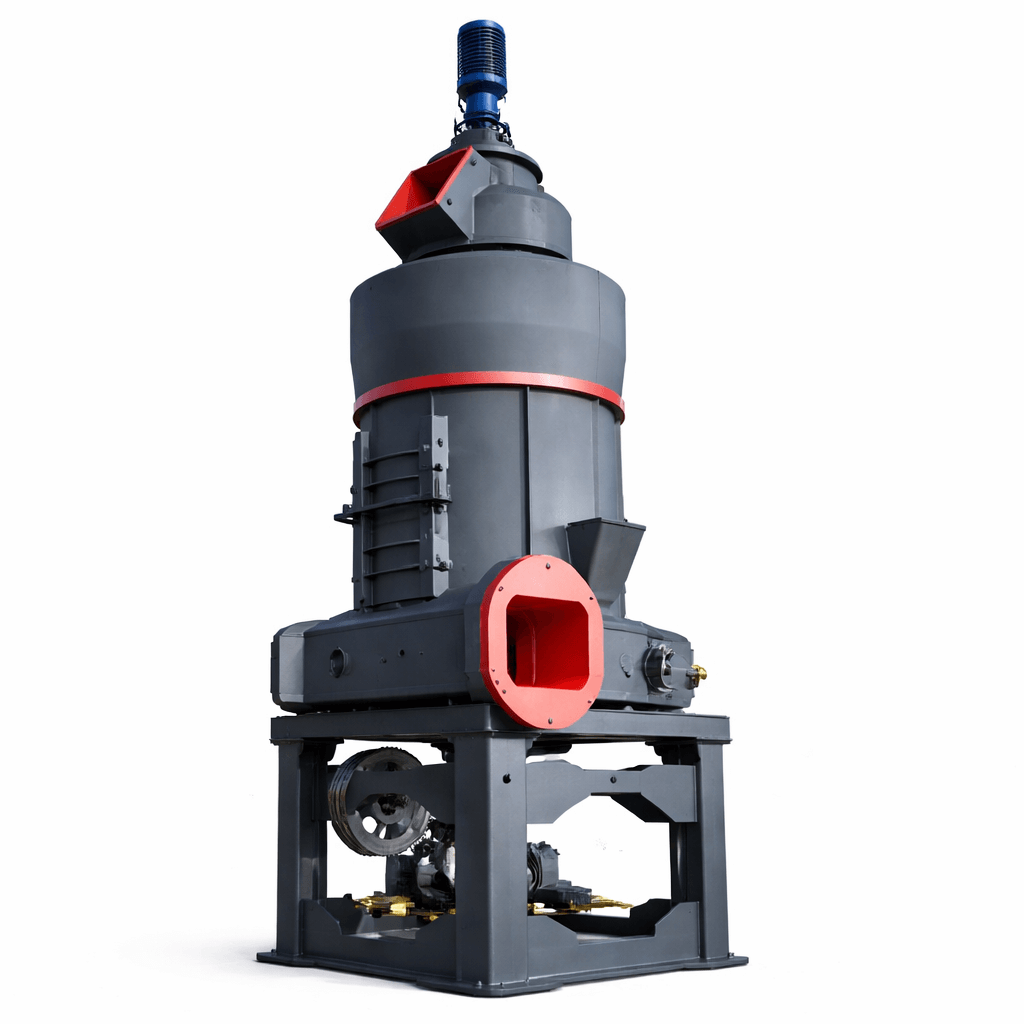
The Raymond mill is a proven grinding system used to produce fine powder from minerals such as limestone, gypsum, coal, calcite, and barite across a wide range of industrial applications.
Pricing Disclaimer: All pricing is subject to change and may be impacted by tariffs, duties, shipping rates, and international market conditions. Final pricing will be confirmed at the time of order placement and locked in once a purchase agreement is issued.
Share Product :
The Raymond mill has a long operating history in the powder processing industry, dating back to its original development in the early twentieth century. Over decades of refinement, it has remained a widely used solution for grinding non-metallic minerals into controlled fine powder for construction materials, mining, chemical processing, power generation, and related industries.
The mill is designed to process materials such as limestone, gypsum, coal, calcite, barite, and similar minerals. As requirements for powder fineness and consistency have increased, particularly in non-metallic mineral applications, the Raymond mill has continued to evolve toward higher efficiency, improved reliability, and more precise classification.
In operation, material enters the mill through the feed hopper and is guided by shovel blades into the grinding zone between the rollers and the grinding ring. The grinding rollers are suspended from a rotating star rack and apply pressure against the ring through combined rotation and centrifugal force. This rolling and squeezing action breaks and grinds the material to the required fineness.
After grinding, airflow generated by the fan carries the powder upward to the analytical machine mounted above the grinding chamber. Fine particles that meet size requirements pass through the classifier and are collected in the cyclone collector as finished product, while coarser particles return to the grinding zone for further processing. The entire airflow path operates under negative pressure in a closed-circuit loop, helping reduce dust and maintain clean operating conditions.
The Raymond mill’s vertical structure allows the host, classifier, and auxiliary equipment to be arranged compactly, reducing foundation requirements and overall installation cost. Improved grinding pressure and enhanced classifier accuracy support stable output, consistent fineness, and efficient energy use compared with older or less integrated grinding systems.
Raymond mills are well suited for operators seeking a mature, serviceable grinding platform that balances capacity, fineness control, and environmental performance. The technical data below outlines available models and key operating parameters. Capacity values are shown as throughput ranges, and rotational speed is shown in revolutions per minute (RPM). Our team can help evaluate suitability based on material type, fineness targets, and production requirements.
The table below provides specifications for Raymond mill models, including roller configuration, feed size limits, discharge size range, capacity, and overall machine dimensions.
| Model | YGM8314 | YGM9517 | YGM4121 |
|---|---|---|---|
| Roller quantity (pcs) | 3 | 4 | 5 |
| Roller diameter (mm) | Φ270 × 140 | Φ310 × 170 | Φ410 × 210 |
| Ring diameter (mm) | Φ830 × 140 | Φ950 × 170 | Φ1280 × 210 |
| Rotational speed (RPM) | 130 | 103 | |
| Max feed size (mm) | 20 | 25 | 30 |
| Discharging size (mm) | 1.6–0.045 | 1.6–0.045 | 1.6–0.045 |
| Capacity (TPH) | 1.2–4.6 | 2.1–8 | 5–11 |
| Machine size (mm) | 5300 × 4100 × 5200 | 7100 × 5900 × 7900 | 9200 × 7250 × 9700 |
Product Specification Disclaimer:
While Bros Dirt Diggers makes every effort to ensure product specifications and details are accurate, final equipment specifications are subject to manufacturer confirmation. Customers should verify all critical details before purchase.
Customize Your Own Crushing Plant Now
Fill your requirements here, and we’ll send the custmized solution and quotation to you by the reserved contact information.
Related Product
Get in Touch
We’re always here to help with your equipment and plant needs.
Send Us a Message
Tell us what you’re working on — our team will help you find the right equipment or solution.
572V+75W Octave, Arizona, USA
Call Center 1
541-513-4542
541-513-4542
Call Center 2
480-241-2454
480-241-2454
brosdirtdiggersllc@gmail.com