Category Crushing Equipment
Roll Crusher
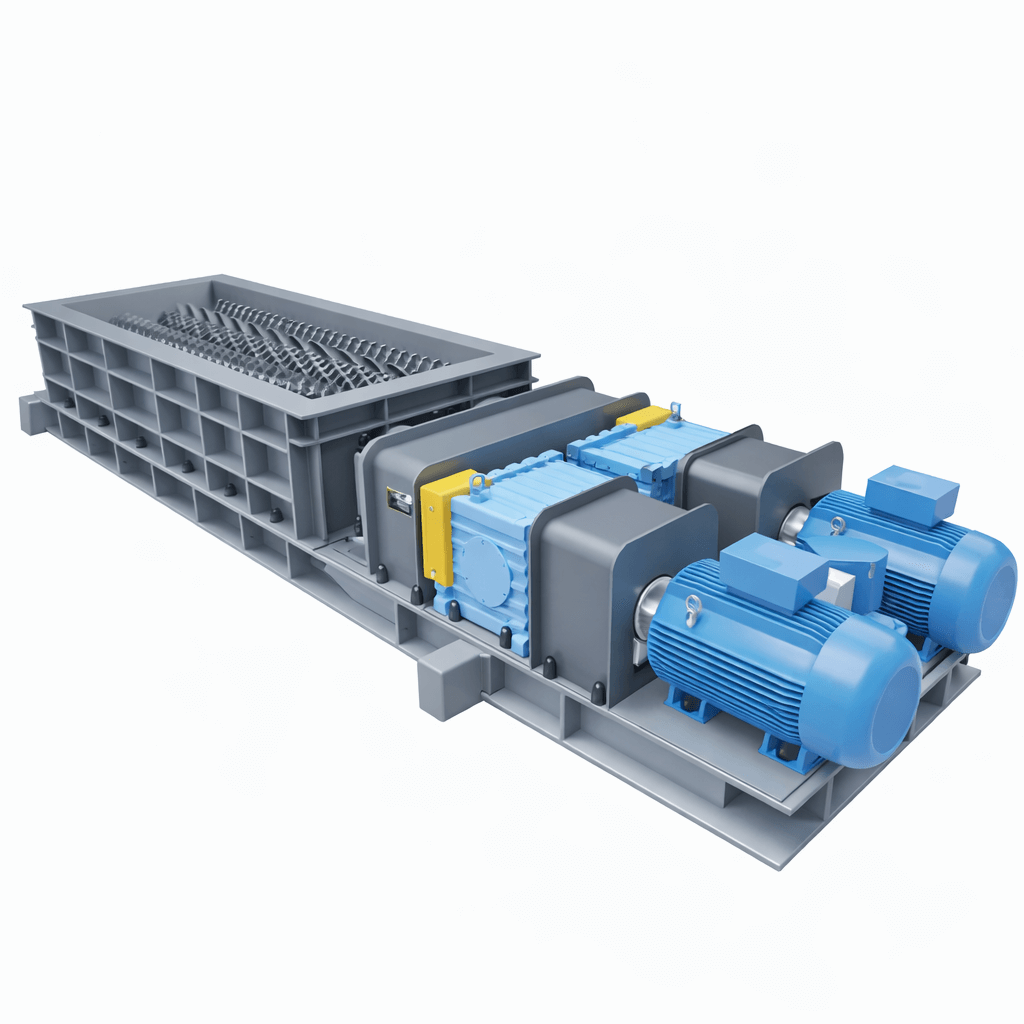
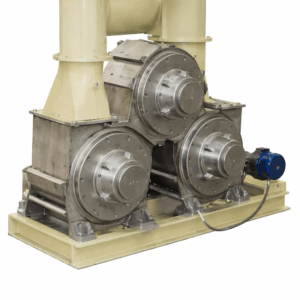
The Roll Crusher is a heavy-duty crushing machine designed for primary and secondary reduction of large, hard materials in aggregate and mining operations.
Pricing Disclaimer: All pricing is subject to change and may be impacted by tariffs, duties, shipping rates, and international market conditions. Final pricing will be confirmed at the time of order placement and locked in once a purchase agreement is issued.
Share Product :
The Roll Crusher combines screening and crushing into a single, integrated system, allowing both functions to be completed independently within one machine. This approach simplifies plant layouts and reduces the need for additional civil works and auxiliary equipment, making it a practical option for high-capacity material processing.
Material is drawn into the crushing chamber between rotating rolls equipped with engineered tooth profiles. As the rolls rotate, material is compressed and sheared to the required size, while the integral box-type crushing cavity maintains a sealed working environment and supports clean, controlled operation.
This configuration improves crushing efficiency while maintaining consistent output and long service life. Adjustable roll spacing allows operators to control product size precisely, and multiple adjustment methods provide reliable positioning with minimal downtime. The robust tooth arrangement supports high block rates and efficient handling of large feed sizes.
The Roll Crusher is well suited for operations processing granite, basalt, marble, iron ore, copper ore, and other hard or abrasive materials. It is commonly used in aggregate production, mining, highway and railway construction, airport infrastructure, and other large-scale material handling applications.
Depending on configuration, the crusher supports capacities from 50–5,000 tons per hour (TPH), with maximum feed sizes up to 1,500 mm and minimum discharge sizes around 30 mm. Multiple tooth structures and walking configurations, including fixed, screw, hydraulic, and electric types, allow the machine to be tailored to specific site and maintenance requirements.
If you are evaluating a high-capacity crushing solution that balances efficiency, durability, and operational simplicity, the Bros Dirt Diggers team can help you determine whether a roll crusher configuration is the right fit for your material and production goals.
This crusher supports large feed sizes and high throughput, with capacity ranges from 50–5,000 TPH, maximum input sizes up to 1,500 mm, minimum output sizes around 30 mm, and power requirements starting at approximately 30 kW depending on configuration.
Product Specification Disclaimer:
While Bros Dirt Diggers makes every effort to ensure product specifications and details are accurate, final equipment specifications are subject to manufacturer confirmation. Customers should verify all critical details before purchase.
Customize Your Own Crushing Plant Now
Fill your requirements here, and we’ll send the custmized solution and quotation to you by the reserved contact information.
Related Product
Get in Touch
We’re always here to help with your equipment and plant needs.
Send Us a Message
Tell us what you’re working on — our team will help you find the right equipment or solution.
572V+75W Octave, Arizona, USA
Call Center 1
541-513-4542
541-513-4542
Call Center 2
480-241-2454
480-241-2454
brosdirtdiggersllc@gmail.com